What an AI sales agent must inherit before it can act
An AI sales agent should inherit a commercial decision before it inherits a tool. It needs to know the outcome it is helping create, which evidence it may trust, how the next action is chosen, what authority it has, when to stop, and how its work will be reviewed.
Without that contract, the agent does not remove ambiguity. It executes ambiguity faster.
The failure mode is autonomy before inheritance. A team connects an agent to email, CRM, calendar, and enrichment tools, then expects the model to discover the sales process from scattered records and examples. The agent can produce activity, but nobody can explain why it acted, which rule it followed, or whether the buyer moved toward a valid decision.
Definition
Definition: An AI sales agent inheritance contract is the minimum operating context and control boundary the agent receives from the commercial process: objective, trusted evidence, decision rule, permissions, escalation, and learning record.
This is not a larger system prompt. It is a compact agreement between Truth, Playbook, Architecture, and Operator.
Truth supplies evidence about the buyer and the current commercial state. Playbook defines what that evidence means and which next actions are valid. Architecture gives the agent tools, permissions, routing, and logs. Operator owns exceptions, review, and correction.
A GTM engineering firm should design those layers before increasing autonomy. The model is one component inside the loop, not the loop itself.
The six parts of an inheritance contract
Start with one decision, not a broad role such as “help sales.” A useful first scope might be: Should this inbound buyer receive active follow-up, a request for missing context, or a nurture path?
Then define six parts.
1. Objective: State the buyer or commercial outcome. “Send more messages” is activity. “Move a qualified buyer to a mutually understood next step” is closer to an outcome.
2. Evidence: Name the sources and fields the agent may treat as trusted. This can include form answers, consent state, account fit, the latest buyer message, call notes, current owner, and the last promised action. If sources disagree, the contract must say which source wins or when to escalate.
3. Decision rule: Convert evidence into a bounded next action. The rule should cover yes, no, and not yet. It should also preserve the situations where judgment is legitimate instead of pretending every buyer fits a branch.
4. Permissions: List the tools and actions available at the current authority level. Read access, drafting, CRM updates, outbound messages, meeting changes, discounts, and contract changes do not carry the same risk.
5. Escalation: Define the conditions that stop execution and transfer control. Examples include conflicting evidence, strategic accounts, legal or pricing questions, negative buyer sentiment, missing consent, repeated tool failure, and any request outside the approved scope.
6. Learning record: Store the evidence used, decision made, action taken, outcome observed, and human correction. Without this record, the team can audit messages but cannot improve the commercial rule.
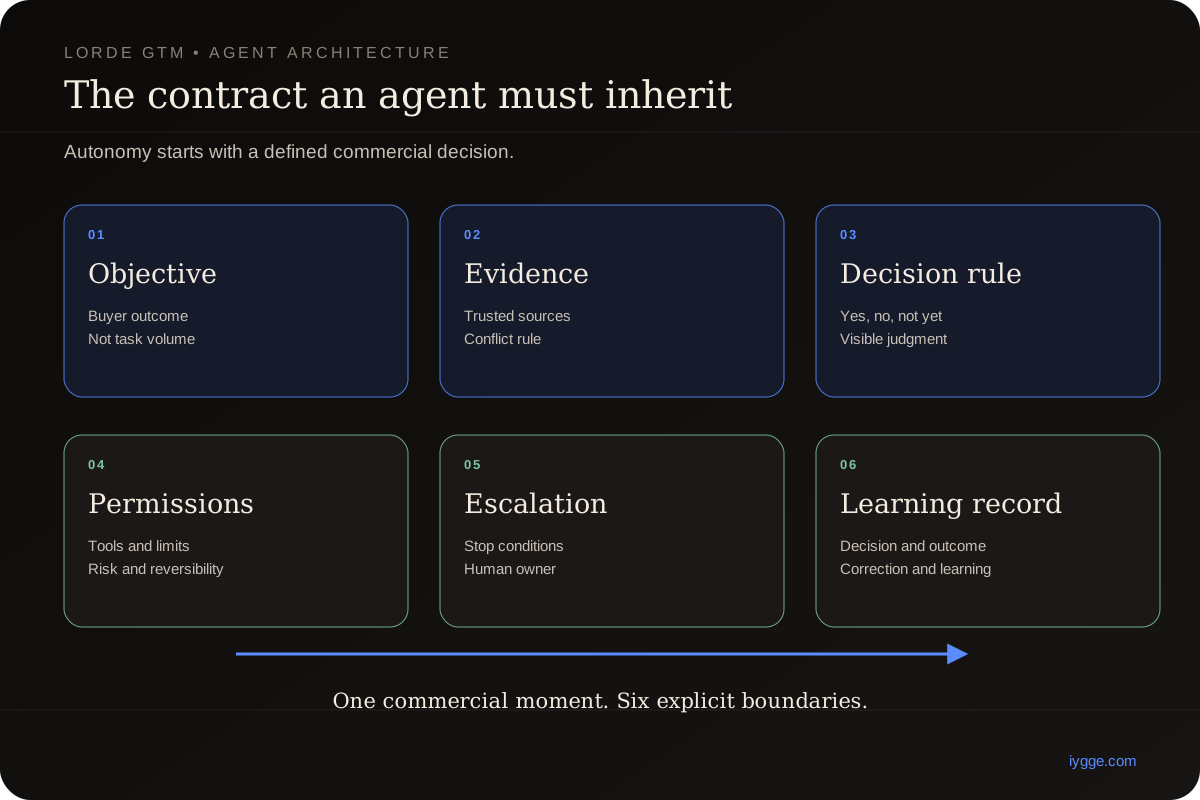
The contract does not need to describe the entire company. It needs to make one commercial moment runnable and inspectable.
Release authority as a ladder
OpenAI's practical guide to building agents recommends assessing tools by factors such as read versus write access, reversibility, account permissions, and financial impact. It also describes guardrails and human intervention as part of reliable agent operation. NIST's Generative AI Profile adds the governance layer: ongoing monitoring, clear human and AI responsibilities, acceptable use, incident review, and records that support evaluation.
These sources do not define your sales process. They clarify why authority should be released in proportion to risk.
Use four levels.
Read: The agent retrieves evidence and summarizes the current state. It cannot alter the record or contact the buyer.
Recommend: The agent proposes a decision, next action, and rationale. A human accepts, edits, or rejects it.
Approve then act: The agent prepares and executes only after approval. This is useful when the action is reversible but external, such as sending a follow-up or changing a meeting.
Bounded action: The agent acts without case-by-case approval only inside explicit criteria, permissions, limits, and escalation rules. The Operator reviews samples, exceptions, and outcome drift.
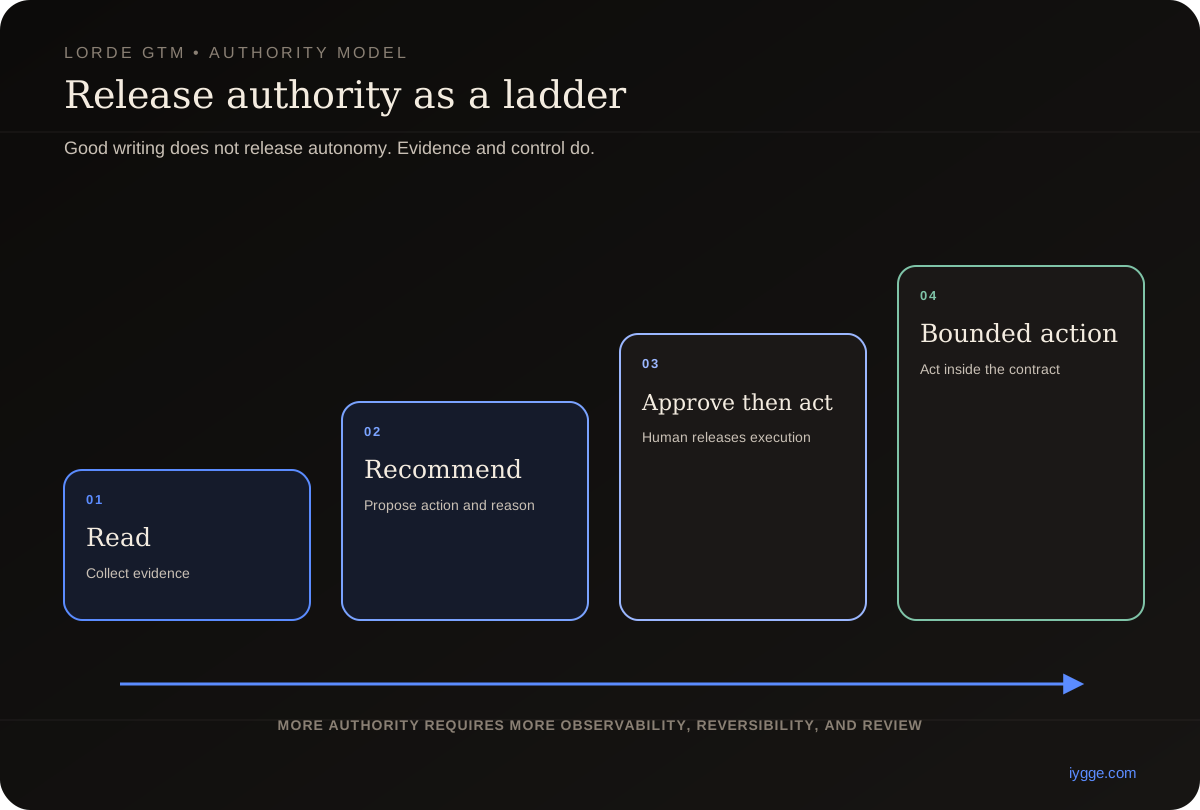
Do not promote the agent because the writing looks good. Promote it when the decision is stable enough to test, the action is observable, the permission is narrow, failures are recoverable, and review shows that corrections are understood.
Decision rule
Use this release rule:
If the team cannot explain the evidence, rule, authority, and escalation for an action in one short contract, keep the agent at Read or Recommend.
Then classify the missing layer:
- If the agent cannot trust the buyer state, repair Truth.
- If trusted evidence still produces inconsistent next actions, repair the Playbook.
- If the action is clear but tools, permissions, routing, or logs are unreliable, repair Architecture.
- If nobody reviews exceptions and corrections, assign an Operator.
Only increase authority after the current level produces an inspectable record. Human approval cannot rescue an undefined decision at scale. It can only move the ambiguity to an approval queue.
Checklist
Apply this to one sales decision this week:
- Write the decision as a buyer question, not a software task.
- Define the commercial outcome and the actions that do not count as progress.
- List trusted evidence and the rule for conflicts or missing context.
- Write the normal yes, no, and not yet paths.
- Rank every tool action by access, reversibility, permission, external impact, and financial impact.
- Set the initial authority level: Read, Recommend, Approve then act, or Bounded action.
- Define stop conditions and the human role that receives each exception.
- Log evidence, decision, action, outcome, and correction.
- Review real cases before expanding the scope or adding another tool.
This produces commercial capacity when the system can handle more valid buyer progress without creating a larger queue of hidden risk or human rescue.
What this is not
This is not a claim that every sales motion needs a complete manual before an agent can help. A narrow Read or Recommend experiment can expose missing evidence and weak rules. The mistake is converting that experiment into action authority before the process has earned it.
It is also not an argument that people should approve every action forever. Approval is one authority level, not the destination. The goal is bounded autonomy where the normal path is explicit, exceptions are visible, and the Operator can improve the loop from evidence.
An agent should not inherit the founder's inbox and guess the company. It should inherit one defined commercial decision and prove that it can carry the rule safely.
FAQ
Does an AI sales agent need a complete playbook before testing?
No. It needs a bounded decision, enough trusted evidence to attempt it, and a safe authority level. Early tests can reveal what the Playbook is missing, provided the agent cannot create external or irreversible consequences without appropriate review.
Which sales actions should always require approval?
There is no universal list. Approval should follow risk. Irreversible actions, financial commitments, sensitive data access, legal statements, strategic account changes, and actions outside the defined process deserve stronger controls or direct human ownership.
How do we know when to increase agent authority?
Increase it when the decision rule is stable, evidence is trustworthy, permissions are narrow, outcomes are logged, failures are recoverable, and review shows that human corrections are becoming predictable rather than merely repetitive.
If your agent project begins with tools but cannot state the inherited decision, a Lorde GTM diagnosis can locate the restriction across Truth, Playbook, Architecture, and Operator before more autonomy is added.
O que um agente de IA em vendas precisa herdar antes de agir
Um agente de IA em vendas deveria herdar uma decisão comercial antes de receber uma ferramenta. Ele precisa saber qual resultado ajuda a produzir, em quais evidências pode confiar, como escolher a próxima ação, qual autoridade possui, quando deve parar e como seu trabalho será revisado.
Sem esse contrato, o agente não elimina ambiguidade. Ele executa a ambiguidade com mais velocidade.
O modo de falha é a autonomia antes da herança. O time conecta o agente ao email, CRM, calendário e ferramentas de enriquecimento, depois espera que o modelo descubra o processo comercial a partir de registros soltos e exemplos. O agente gera atividade, mas ninguém consegue explicar por que ele agiu, qual regra seguiu ou se o comprador avançou para uma decisão válida.
Definição
Definição: O contrato de herança de um agente de IA em vendas é o contexto operacional mínimo e o limite de controle que ele recebe do processo comercial: objetivo, evidências confiáveis, regra de decisão, permissões, escalada e registro de aprendizado.
Isso não é um prompt de sistema maior. É um acordo compacto entre Verdade, Playbook, Arquitetura e Operador.
Verdade fornece as evidências sobre o comprador e o estado atual da oportunidade. Playbook define o que essas evidências significam e quais próximos movimentos são válidos. Arquitetura entrega ferramentas, permissões, roteamento e logs. Operador cuida das exceções, da revisão e das correções.
Uma firma de engenharia de GTM deveria desenhar essas camadas antes de ampliar a autonomia. O modelo é um componente dentro do circuito, não o circuito inteiro.
As seis partes do contrato de herança
Comece por uma decisão, não por um papel amplo como “ajudar vendas”. Um primeiro escopo útil pode ser: este comprador inbound deve receber acompanhamento ativo, um pedido de contexto adicional ou uma trilha de nutrição?
Depois, defina seis partes.
1. Objetivo: Declare o resultado comercial ou do comprador. “Enviar mais mensagens” é atividade. “Levar um comprador qualificado a um próximo passo entendido pelas duas partes” se aproxima de um resultado.
2. Evidências: Nomeie as fontes e os campos que o agente pode tratar como confiáveis. Isso pode incluir respostas do formulário, consentimento, aderência da conta, última mensagem do comprador, notas de reunião, responsável atual e última ação prometida. Se as fontes divergirem, o contrato deve dizer qual prevalece ou quando escalar.
3. Regra de decisão: Transforme evidência em uma próxima ação limitada. A regra precisa cobrir sim, não e ainda não. Também deve preservar os pontos em que o julgamento é legítimo, em vez de fingir que todo comprador cabe em uma bifurcação.
4. Permissões: Liste as ferramentas e ações liberadas no nível atual de autoridade. Ler dados, criar rascunhos, atualizar o CRM, enviar mensagens, mover reuniões, conceder descontos e alterar contratos não carregam o mesmo risco.
5. Escalada: Defina as condições que interrompem a execução e transferem o controle. Exemplos: evidências conflitantes, contas estratégicas, questões jurídicas ou de preço, sentimento negativo do comprador, consentimento ausente, falha repetida de ferramenta e qualquer pedido fora do escopo aprovado.
6. Registro de aprendizado: Guarde a evidência usada, a decisão tomada, a ação executada, o resultado observado e a correção humana. Sem esse registro, o time audita mensagens, mas não melhora a regra comercial.
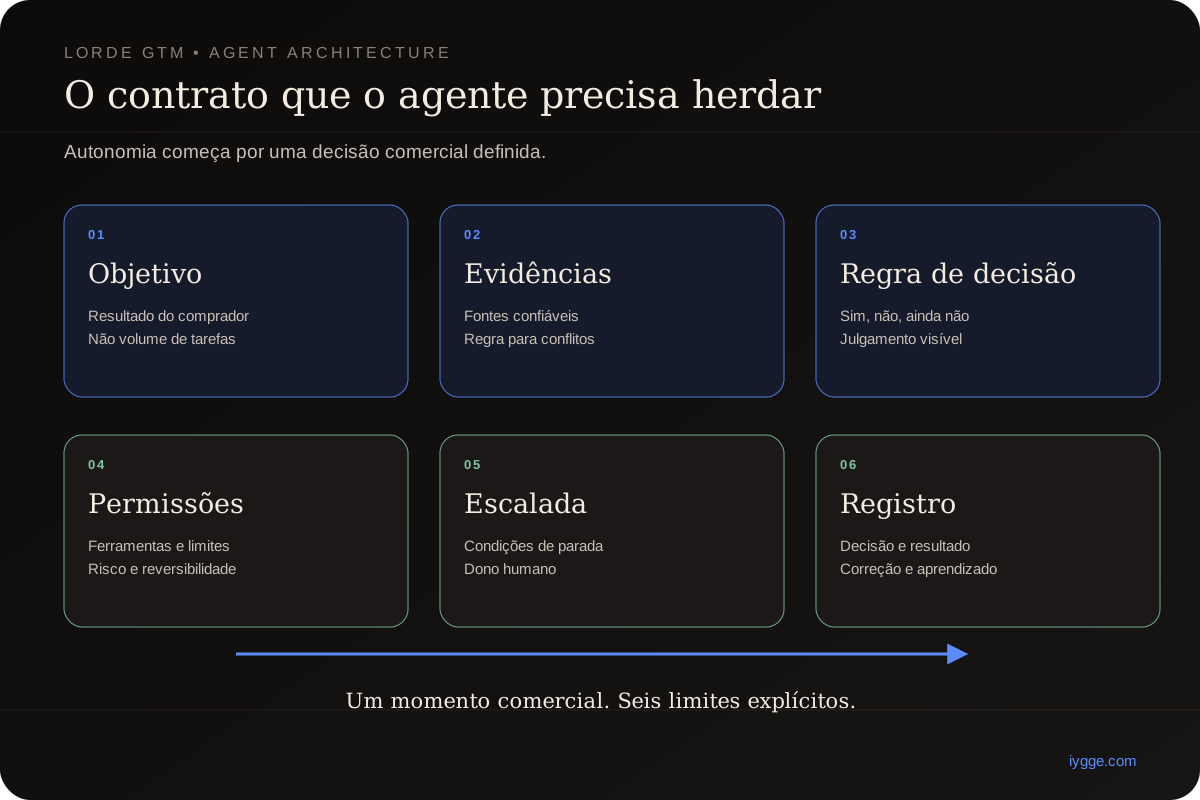
O contrato não precisa descrever a empresa inteira. Precisa tornar um momento comercial executável e inspecionável.
Libere autoridade como uma escada
O guia prático da OpenAI para construção de agentes recomenda avaliar ferramentas por fatores como acesso de leitura ou escrita, reversibilidade, permissões da conta e impacto financeiro. O material também trata guardrails e intervenção humana como partes da operação confiável. O perfil de IA generativa do NIST adiciona a camada de governança: monitoramento contínuo, papéis claros para pessoas e IA, uso aceitável, revisão de incidentes e registros que apoiem a avaliação.
Essas fontes não definem seu processo de vendas. Elas mostram por que a autoridade precisa crescer na proporção do risco.
Use quatro níveis.
Leitura: O agente reúne evidências e resume o estado atual. Não altera o registro nem fala com o comprador.
Recomendação: O agente propõe uma decisão, próxima ação e justificativa. Uma pessoa aceita, edita ou rejeita.
Aprovação antes da ação: O agente prepara e executa somente depois da aprovação. É útil quando a ação é reversível, mas externa, como enviar um follow-up ou alterar uma reunião.
Ação limitada: O agente atua sem aprovação caso a caso apenas dentro de critérios, permissões, limites e regras de escalada explícitos. O Operador revisa amostras, exceções e desvios de resultado.
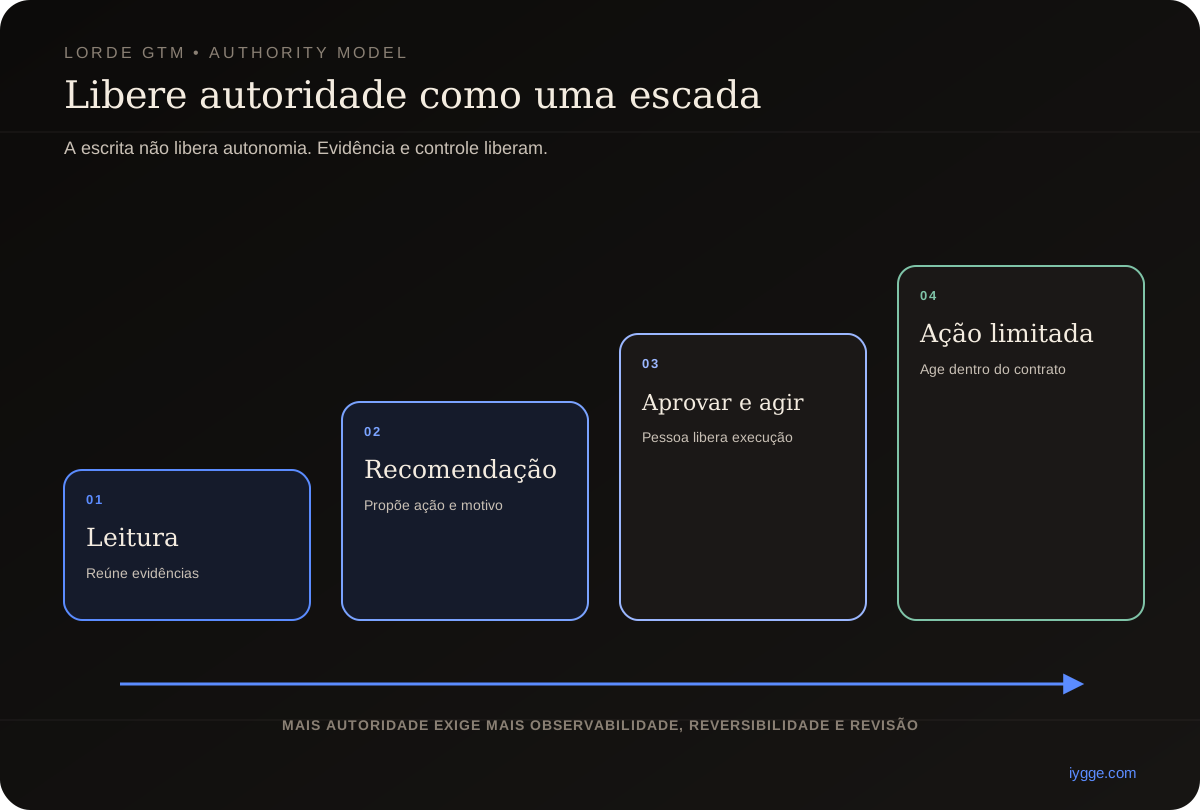
Não promova o agente porque o texto parece bom. Amplie a autoridade quando a decisão estiver estável o bastante para teste, a ação for observável, a permissão for estreita, as falhas puderem ser corrigidas e a revisão mostrar que as correções estão sendo compreendidas.
Regra de decisão
Use esta regra de liberação:
Se o time não consegue explicar evidência, regra, autoridade e escalada em um contrato curto, mantenha o agente em Leitura ou Recomendação.
Depois, classifique a camada ausente:
- Se o agente não consegue confiar no estado do comprador, repare Verdade.
- Se evidências confiáveis ainda geram próximas ações inconsistentes, repare o Playbook.
- Se a ação está clara, mas ferramentas, permissões, roteamento ou logs não são confiáveis, repare Arquitetura.
- Se ninguém revisa exceções e correções, atribua um Operador.
Aumente a autoridade somente depois que o nível atual produzir um registro inspecionável. Aprovação humana não salva uma decisão indefinida em escala. Ela apenas transfere a ambiguidade para uma fila de aprovação.
Checklist
Aplique isto a uma decisão comercial ainda nesta semana:
- Escreva a decisão como uma pergunta sobre o comprador, não como uma tarefa de software.
- Defina o resultado comercial e as ações que não contam como avanço.
- Liste evidências confiáveis e a regra para conflitos ou contexto ausente.
- Escreva os caminhos normais de sim, não e ainda não.
- Classifique cada ação de ferramenta por acesso, reversibilidade, permissão, impacto externo e impacto financeiro.
- Escolha o nível inicial: Leitura, Recomendação, Aprovação antes da ação ou Ação limitada.
- Defina condições de parada e o papel humano que recebe cada exceção.
- Registre evidência, decisão, ação, resultado e correção.
- Revise casos reais antes de ampliar o escopo ou adicionar outra ferramenta.
Isso cria capacidade comercial quando o sistema absorve mais avanço válido do comprador sem abrir uma fila maior de risco oculto ou resgate humano.
O que isso não é
Não estamos dizendo que todo movimento de vendas precisa de um manual completo antes que um agente ajude. Um experimento estreito em Leitura ou Recomendação pode revelar evidências ausentes e regras frágeis. O erro é transformar esse teste em autoridade de ação antes que o processo mereça essa confiança.
Também não defendemos que pessoas aprovem toda ação para sempre. Aprovação é um nível de autoridade, não o destino. O objetivo é uma autonomia limitada, em que o caminho normal está explícito, as exceções aparecem e o Operador melhora o circuito a partir de evidências.
Um agente não deveria herdar a caixa de entrada do fundador e adivinhar a empresa. Deveria herdar uma decisão comercial definida e provar que consegue transportar essa regra com segurança.
Perguntas frequentes
Um agente de IA em vendas precisa de um Playbook completo antes do teste?
Não. Ele precisa de uma decisão limitada, evidências confiáveis suficientes e um nível seguro de autoridade. Os primeiros testes podem revelar o que falta no Playbook, desde que o agente não crie consequências externas ou irreversíveis sem a revisão adequada.
Quais ações comerciais sempre deveriam exigir aprovação?
Não existe uma lista universal. A aprovação acompanha o risco. Ações irreversíveis, compromissos financeiros, acesso a dados sensíveis, afirmações jurídicas, mudanças em contas estratégicas e movimentos fora do processo definido exigem controles mais fortes ou responsabilidade humana direta.
Como saber quando aumentar a autonomia do agente?
Aumente quando a regra de decisão estiver estável, as evidências forem confiáveis, as permissões forem estreitas, os resultados estiverem registrados, as falhas puderem ser corrigidas e a revisão mostrar que as correções humanas estão ficando previsíveis, não apenas repetitivas.
Se o projeto começa pelas ferramentas, mas não consegue dizer qual decisão o agente herdou, um diagnóstico de GTM da Lorde pode localizar a restrição entre Verdade, Playbook, Arquitetura e Operador antes que mais autonomia seja liberada.