How to find the restriction in a founder-led revenue loop
The founder is not automatically the restriction in a founder-led business. The restriction is the recurring point where buyer progress waits, loses meaning, or returns for rescue because the commercial system cannot make the next decision without the founder.
That distinction prevents a common mistake: treating founder involvement as the problem instead of tracing why the involvement is required.
The failure mode is founder gravity. Normal opportunities keep orbiting back to one person for qualification, positioning, pricing, proposal judgment, follow-up, or relationship access. The founder appears to be everywhere, but the underlying break can sit in missing Truth, an unwritten Playbook, disconnected Architecture, or absent Operator ownership.
The goal is not to remove the founder from revenue. It is to reserve founder judgment for strategic decisions instead of using it as infrastructure for the normal path.
Definition
Definition: A founder-led revenue restriction is the repeated dependency that most limits reliable buyer progress because a normal commercial decision, handoff, or exception cannot move without founder input.
The word repeated matters. One strategic deal that needs the founder is not a system diagnosis. A pricing exception, major partnership, category-defining buyer, or sensitive negotiation may rationally belong to the founder.
A restriction becomes visible when similar opportunities stall at the same moment, require the same interpretation, or trigger the same rescue. That pattern limits commercial capacity because additional demand creates more founder decisions rather than more reliable progress.
Follow the buyer, not the org chart
Do not begin with a responsibility matrix or a list of everything the founder does. Begin with a small sample of live buyer paths.
For each opportunity, write six observations:
Signal: What meaningful buyer event started this part of the path?
Decision: Which commercial question must be answered now?
Evidence: What facts are required to answer it?
Owner: Who is expected to make or execute the decision?
Handoff: Where must the evidence and responsibility travel next?
Wait: What condition keeps the buyer from moving?
Run the trace from first meaningful intent to a closed decision. A founder-led loop rarely breaks because the team has no tasks. It breaks because a pending decision has no shared evidence, no executable rule, no route, or no accountable cadence.
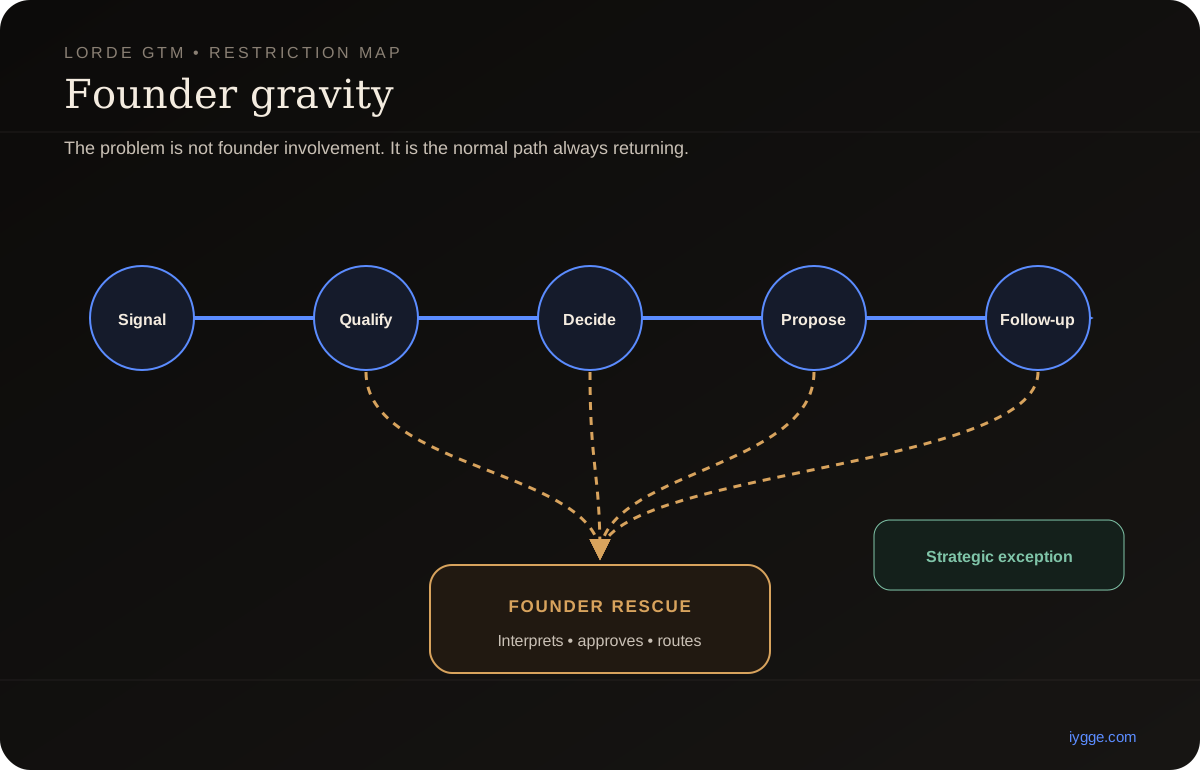
Look for repetition, not drama. The loudest emergency may be an exception. The restriction is the pattern that governs the largest amount of useful flow.
Test the return path through four layers
The Theory of Constraints offers a useful sequence: identify the constraint, use the existing constraint better, align the rest of the system to it, add capacity only when needed, then repeat because the constraint can move. This does not make a revenue loop identical to a factory. It gives the operator a discipline for focusing improvement.
Use the four GTM engineering layers to classify why work returns to the founder.
Truth: The founder holds context the record does not. Buyer history lives in memory. Qualification evidence is incomplete. Two sources disagree and nobody knows which one wins. The founder is not necessarily the decision bottleneck. The truth layer is forcing a search for private context.
Playbook: The evidence exists, but the team cannot choose the next action. Positioning changes by conversation. Qualification depends on intuition nobody has made visible. Proposal structure restarts from zero. The founder is carrying the decision rule.
Architecture: The rule is understood, but systems and handoffs cannot carry it. Notes do not reach the next owner. The CRM records a stage without its reason. Follow-up waits because no trigger, route, or exception queue exists. The founder becomes a manual integration.
Operator: Truth, rules, and tools exist, but nobody maintains cadence, resolves exceptions, or corrects drift. The founder becomes the only person who notices that an opportunity has stopped.
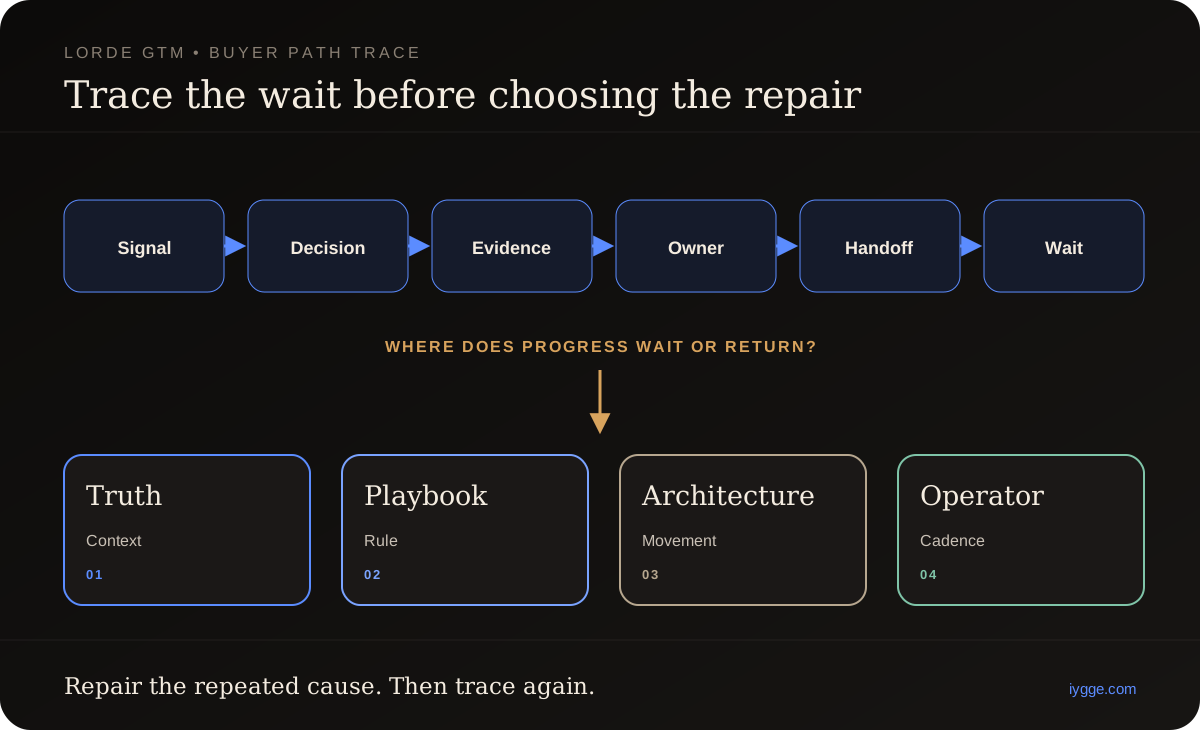
A single opportunity may expose several weak layers. Choose the one that most often creates the repeated wait. Repairing every weakness at once turns diagnosis into a transformation program and hides whether the first change worked.
Separate strategic judgment from recurring rescue
Bain's RAPID framework distinguishes recommendation, input, execution, agreement, and decision. The useful principle here is that participation is not the same as decision ownership. The founder can supply input or retain the final call for specific high-value decisions without becoming the default decider for every normal case.
Create two lanes.
Strategic judgment: Category shifts, material pricing exceptions, flagship relationships, legal exposure, capital allocation, and decisions that can change the company. Founder ownership may be appropriate.
Recurring path: Qualification, standard follow-up, evidence collection, routine proposal movement, common objections, meeting preparation, and normal exception handling. These moments should become runnable through shared Truth, Playbook, Architecture, and Operator ownership.
If the founder says, “I need to see everything because the team gets it wrong,” do not debate delegation first. Take three recent corrections and ask what changed the decision. Was the missing element evidence, a criterion, authority, or execution? Convert the correction into the correct layer instead of adding another approval step.
Decision rule
Use this rule to name the first restriction:
If the same normal buyer decision returns to the founder three times for the same missing reason, treat the missing reason as a system restriction, not the founder's workload as the diagnosis.
Then choose the repair:
- Missing or disputed context means repair Truth.
- Trusted context with inconsistent action means repair the Playbook.
- A clear action that cannot travel means repair Architecture.
- A runnable path that still waits means assign an Operator.
- Only add headcount after the motion is defined and demand still exceeds available execution.
The number three is a sampling rule for this audit, not a universal threshold. Its job is to stop one dramatic case from becoming the operating theory.
Checklist
Run this trace on five live opportunities this week:
- Select opportunities with recent buyer intent and different outcomes.
- Write the current pending decision for each one.
- Name the evidence required and where it currently lives.
- Record the owner, next handoff, and reason for waiting.
- Mark every point where the founder interprets, approves, routes, or rescues.
- Separate strategic exceptions from normal-path returns.
- Group repeated returns by Truth, Playbook, Architecture, or Operator.
- Choose one repair that removes the most common wait.
- Run the same trace after the repair and look for the next restriction.
Do not measure success by how few meetings include the founder. Measure whether valid buyer progress can continue with the same logic and whether exceptions reach the founder with better evidence.
What this is not
This is not a campaign against founder-led sales. Founders can create trust, sharpen category language, hear market change early, and close decisions that deserve their authority. Removing them indiscriminately can weaken the motion.
It is also not a promise that the first restriction is internal. Weak demand, poor offer fit, market timing, delivery capacity, or pricing can govern growth. The trace should reveal that rather than force every problem into sales operations.
The target is not founder absence. It is commercial capacity that does not require the founder to rebuild the normal path for each buyer.
FAQ
Is the founder always the restriction in a founder-led business?
No. The restriction may be demand, offer, evidence quality, a decision rule, a system handoff, delivery capacity, or ownership. Founder involvement becomes relevant when normal buyer progress repeatedly waits for the same founder intervention.
Should the founder leave sales completely?
Usually not by default. Preserve founder ownership where their judgment or relationship is strategically valuable. Engineer the repeatable path so routine decisions do not consume the same attention.
What if every part of the revenue loop looks weak?
Trace a small sample and choose the repeated wait that most limits buyer progress now. Repair it, then trace again. The next restriction can move. A ranked list of every weakness is not the same as an operating priority.
If opportunities repeatedly return to the founder and the missing layer is unclear, a Lorde GTM diagnosis can trace the commercial loop and separate a Truth, Playbook, Architecture, or Operator restriction from a wider company operating system problem.
Como encontrar a restrição em um loop de receita liderado pelo fundador
O fundador não é automaticamente a restrição de uma empresa liderada por ele. A restrição é o ponto recorrente em que o avanço do comprador espera, perde sentido ou volta para resgate porque o sistema comercial não consegue tomar a próxima decisão sem a participação do fundador.
Essa diferença evita um erro comum: tratar o envolvimento do fundador como o problema sem rastrear por que ele se tornou necessário.
O modo de falha é a gravidade do fundador. Oportunidades normais voltam para a mesma pessoa em busca de qualificação, posicionamento, preço, julgamento de proposta, follow-up ou acesso ao relacionamento. O fundador parece estar em toda parte, mas a quebra pode estar em Verdade ausente, Playbook não escrito, Arquitetura desconectada ou falta de dono na camada de Operador.
O objetivo não é retirar o fundador da receita. É reservar o julgamento dele para decisões estratégicas, em vez de usá-lo como infraestrutura do caminho normal.
Definição
Definição: Uma restrição de receita liderada pelo fundador é a dependência repetida que mais limita o avanço confiável do comprador porque uma decisão, passagem ou exceção comercial normal não consegue seguir sem a participação dele.
A palavra repetida importa. Um negócio estratégico que precisa do fundador não forma um diagnóstico de sistema. Uma exceção de preço, parceria relevante, comprador que define categoria ou negociação sensível pode pertencer legitimamente ao fundador.
A restrição aparece quando oportunidades parecidas param no mesmo momento, exigem a mesma interpretação ou acionam o mesmo resgate. Esse padrão limita a capacidade comercial, pois mais demanda cria mais decisões para o fundador, não mais avanço confiável.
Siga o comprador, não o organograma
Não comece por uma matriz de responsabilidades nem por uma lista de tudo que o fundador faz. Comece por uma amostra pequena de caminhos reais de compradores.
Para cada oportunidade, registre seis observações:
Sinal: Qual evento relevante do comprador iniciou esta parte do caminho?
Decisão: Qual pergunta comercial precisa ser respondida agora?
Evidência: Quais fatos são necessários para responder?
Dono: Quem deveria decidir ou executar?
Passagem: Para onde a evidência e a responsabilidade precisam seguir?
Espera: Qual condição impede o comprador de avançar?
Faça o rastreamento desde o primeiro sinal de intenção até uma decisão encerrada. Um loop liderado pelo fundador raramente quebra por falta de tarefas. Ele quebra porque uma decisão pendente não tem evidência compartilhada, regra executável, rota ou cadência com dono.
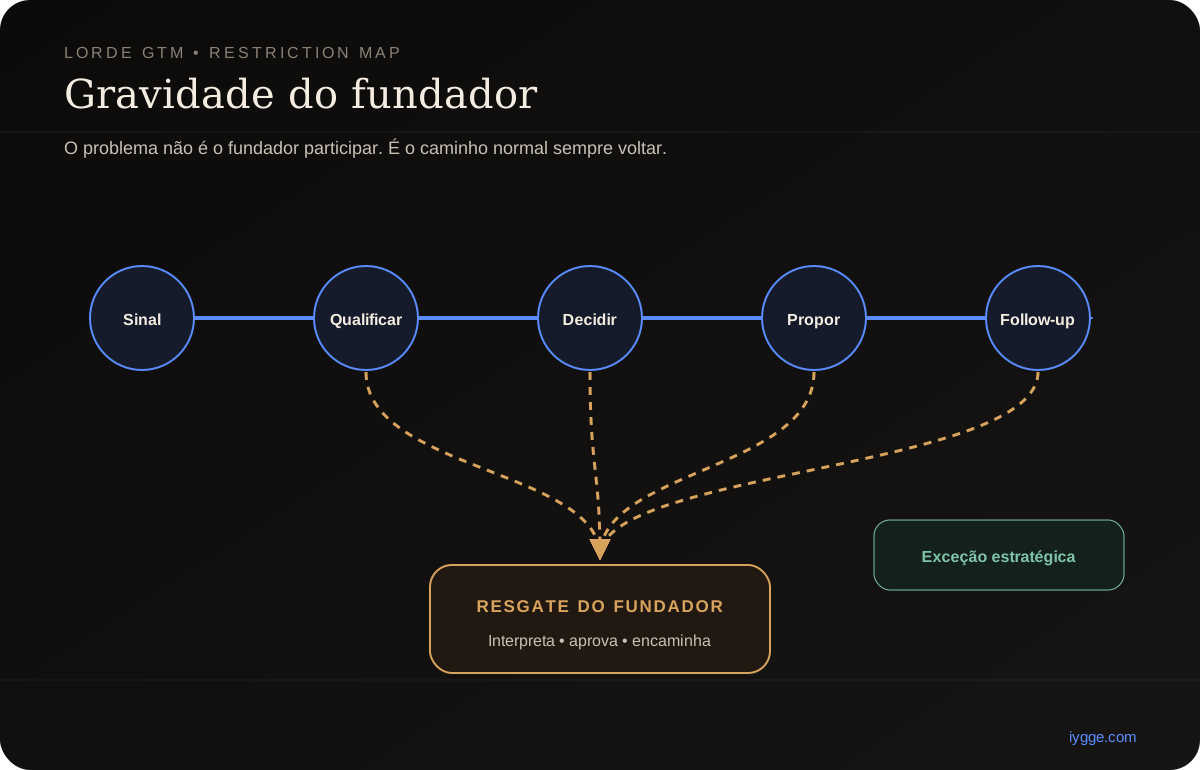
Procure repetição, não drama. A urgência mais barulhenta pode ser uma exceção. A restrição é o padrão que governa a maior parte do fluxo útil.
Teste o caminho de volta nas quatro camadas
A Teoria das Restrições oferece uma sequência útil: identificar a restrição, aproveitar melhor a capacidade existente, alinhar o restante do sistema a ela, ampliar capacidade somente quando necessário e repetir, pois a restrição pode mudar. Isso não torna um loop de receita idêntico a uma fábrica. Apenas oferece disciplina para concentrar a melhoria.
Use as quatro camadas da engenharia de GTM para classificar por que o trabalho retorna ao fundador.
Verdade: O fundador guarda um contexto que não está no registro. O histórico do comprador vive na memória. A evidência de qualificação está incompleta. Duas fontes divergem e ninguém sabe qual prevalece. O fundador pode não ser o gargalo da decisão. A camada de Verdade está forçando uma busca por contexto privado.
Playbook: A evidência existe, mas o time não escolhe a próxima ação. O posicionamento muda em cada conversa. A qualificação depende de uma intuição que ninguém tornou visível. A proposta recomeça do zero. O fundador está carregando a regra de decisão.
Arquitetura: A regra é compreendida, mas sistemas e passagens não conseguem transportá-la. As notas não chegam ao próximo responsável. O CRM registra uma etapa sem o motivo. O follow-up espera porque não existe gatilho, rota nem fila de exceção. O fundador vira uma integração manual.
Operador: Verdade, regras e ferramentas existem, mas ninguém mantém a cadência, resolve exceções ou corrige desvios. O fundador se torna a única pessoa que percebe quando uma oportunidade parou.
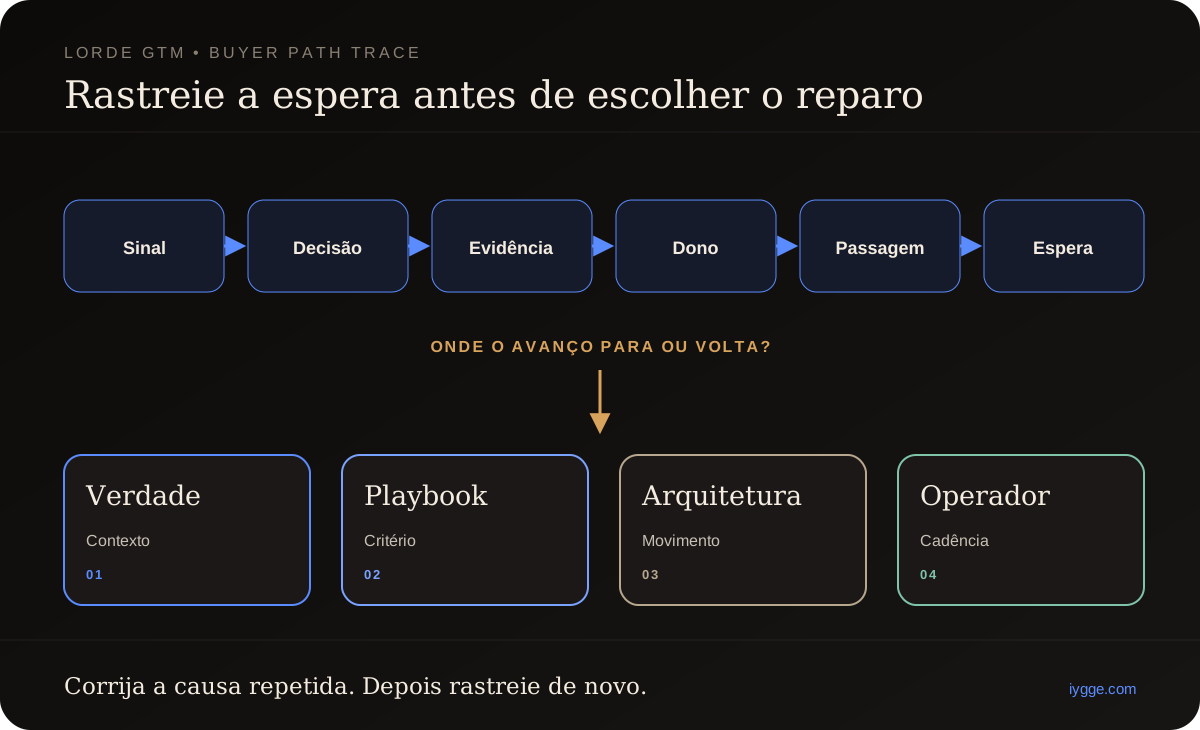
Uma oportunidade pode expor várias camadas fracas. Escolha aquela que mais vezes cria a espera repetida. Tentar corrigir tudo ao mesmo tempo transforma o diagnóstico em um programa de transformação e esconde se a primeira mudança funcionou.
Separe julgamento estratégico de resgate recorrente
O framework RAPID, da Bain, distingue recomendação, contribuição, execução, concordância e decisão. O princípio útil aqui é que participar não significa ser dono da decisão. O fundador pode contribuir ou manter a palavra final em decisões específicas de alto valor sem virar o decisor padrão de todo caso normal.
Crie duas faixas.
Julgamento estratégico: Mudanças de categoria, exceções materiais de preço, relacionamentos decisivos, exposição jurídica, alocação de capital e decisões que podem alterar a empresa. A responsabilidade do fundador pode ser adequada.
Caminho recorrente: Qualificação, follow-up padrão, coleta de evidências, movimentação rotineira de propostas, objeções comuns, preparação de reuniões e tratamento normal de exceções. Esses momentos deveriam se tornar executáveis por meio de Verdade, Playbook, Arquitetura e responsabilidade de Operador.
Se o fundador diz “preciso ver tudo porque o time erra”, não comece discutindo delegação. Pegue três correções recentes e pergunte o que mudou a decisão. Faltava evidência, critério, autoridade ou execução? Converta a correção na camada certa, em vez de criar mais uma aprovação.
Regra de decisão
Use esta regra para nomear a primeira restrição:
Se a mesma decisão normal de comprador volta ao fundador três vezes pelo mesmo motivo ausente, trate esse motivo como restrição do sistema, não use a carga do fundador como diagnóstico.
Depois, escolha o reparo:
- Contexto ausente ou em disputa pede reparo em Verdade.
- Contexto confiável com ação inconsistente pede reparo no Playbook.
- Uma ação clara que não consegue viajar pede reparo em Arquitetura.
- Um caminho executável que continua esperando precisa de um Operador.
- Adicione pessoas somente depois que o movimento estiver definido e a demanda ainda superar a execução disponível.
O número três é uma regra de amostragem para esta auditoria, não um limite universal. Ele serve para impedir que um caso dramático vire a teoria de operação.
Checklist
Aplique este rastreamento a cinco oportunidades vivas nesta semana:
- Escolha negócios com intenção recente e resultados diferentes.
- Escreva a decisão pendente em cada oportunidade.
- Nomeie a evidência necessária e onde ela está hoje.
- Registre o dono, a próxima passagem e o motivo da espera.
- Marque cada ponto em que o fundador interpreta, aprova, encaminha ou resgata.
- Separe exceções estratégicas de retornos do caminho normal.
- Agrupe retornos repetidos por Verdade, Playbook, Arquitetura ou Operador.
- Escolha um reparo que elimine a espera mais comum.
- Repita o rastreamento depois da mudança e procure a próxima restrição.
Não meça o sucesso pela quantidade de reuniões sem o fundador. Meça se o avanço válido do comprador continua com a mesma lógica e se as exceções chegam ao fundador com evidências melhores.
O que isso não é
Isso não é uma campanha contra vendas lideradas pelo fundador. Fundadores podem gerar confiança, melhorar a linguagem da categoria, perceber mudanças de mercado cedo e fechar decisões que merecem sua autoridade. Retirá-los sem critério pode enfraquecer o movimento.
Também não prometemos que a primeira restrição seja interna. Demanda fraca, oferta sem aderência, timing de mercado, capacidade de entrega ou preço podem governar o crescimento. O rastreamento deve revelar isso, não forçar todo problema para dentro da operação comercial.
O alvo não é a ausência do fundador. É uma capacidade comercial que não exige que ele reconstrua o caminho normal para cada comprador.
Perguntas frequentes
O fundador sempre é a restrição em uma empresa liderada por ele?
Não. A restrição pode estar na demanda, oferta, qualidade da evidência, regra de decisão, passagem entre sistemas, capacidade de entrega ou responsabilidade. O envolvimento do fundador importa quando o avanço normal do comprador espera repetidamente pela mesma intervenção.
O fundador deveria sair totalmente das vendas?
Não por padrão. Preserve a responsabilidade do fundador quando o julgamento ou o relacionamento dele tiver valor estratégico. Engenhe o caminho repetível para que decisões rotineiras não consumam a mesma atenção.
E se todas as partes do loop de receita parecerem fracas?
Rastreie uma amostra pequena e escolha a espera repetida que mais limita o avanço agora. Corrija, depois rastreie novamente. A próxima restrição pode mudar. Uma lista ordenada de todas as fraquezas não é a mesma coisa que uma prioridade operacional.
Se as oportunidades sempre voltam ao fundador e a camada ausente não está clara, um diagnóstico de GTM da Lorde pode rastrear o loop comercial e separar uma restrição de Verdade, Playbook, Arquitetura ou Operador de um problema mais amplo do sistema operacional da empresa.