GTM Engineering Beyond the Role: How Founder-Led Companies Build Commercial Capacity
Most companies ask who to hire before they define what the commercial system must do.
That sequence is expensive. A new operator can inherit conflicting definitions, broken handoffs, scattered tools, and a founder who still resolves every exception. The hire adds capacity to the queue without removing the restriction.
GTM engineering starts one step earlier. It turns commercial evidence, decision rules, systems, and ownership into a reliable way to create buyer progress.
That may lead to an internal GTM engineer. It may lead to RevOps, an agency, or a temporary GTM engineering firm. The correct delivery model depends on what is missing.
Definition
GTM engineering is the discipline of turning commercial evidence and decisions into a reliable operating system for buyer progress.
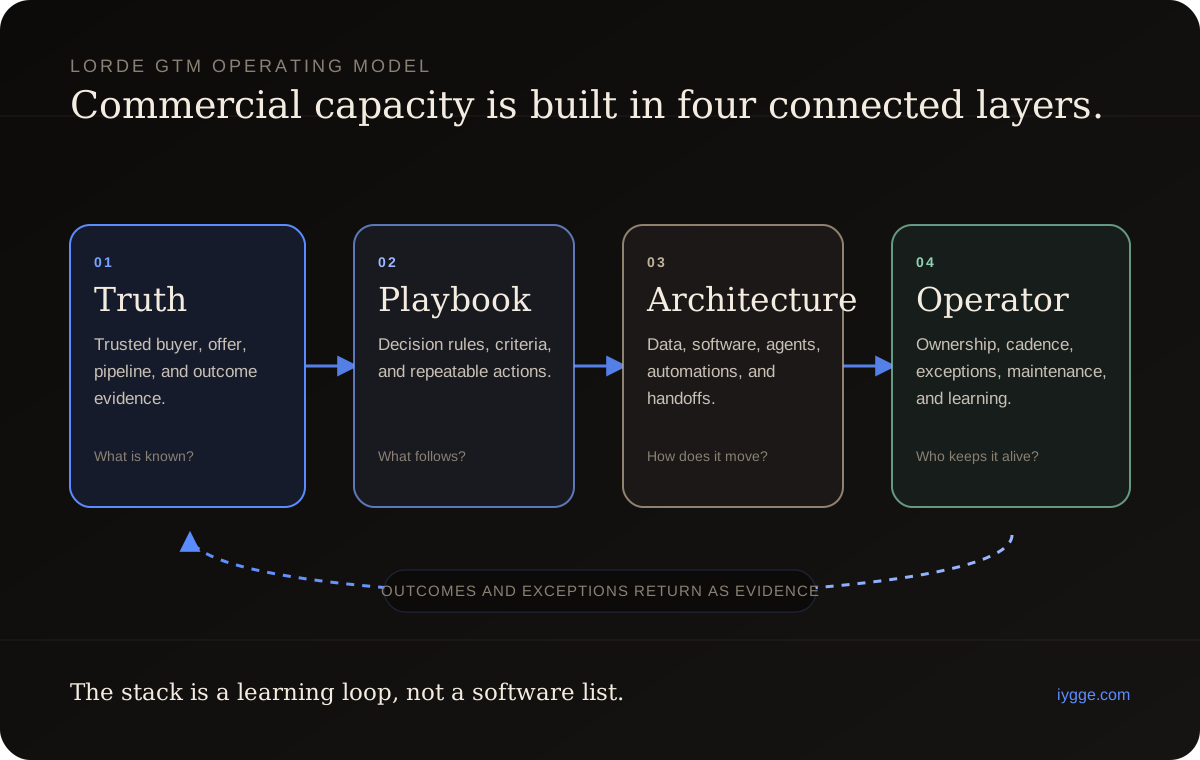
In the Lorde model, that operating system has four layers:
- Truth: the buyer, pipeline, offer, and performance evidence the company trusts.
- Playbook: the decisions, criteria, and repeatable actions the team can explain.
- Architecture: the data, software, automations, agents, and handoffs that carry the work.
- Operator: the ownership, cadence, exception handling, and improvement loop that keep the system useful.
This definition is intentionally broader than automation.
A workflow can move data perfectly and still produce no useful decision. A CRM can be clean while marketing and sales disagree about qualification. An AI agent can draft follow-up while nobody owns the next buyer commitment.
GTM engineering is not the tool layer. It is the commercial logic the tool layer must inherit.
Why this category exists now
Clay helped popularize GTM engineering as a hybrid role that builds automated revenue systems with AI, data enrichment, and workflow automation. Its category guide describes three practical rungs: Data foundation, Data modeling, and Data activation.
That model captures a real shift. Research, enrichment, routing, personalization, and internal tools no longer require the same engineering queue they once did. A commercially fluent builder can test and ship useful workflows much faster.
But cheaper execution creates a second problem: companies can now automate ambiguity faster.
A lead score built on conflicting ICP definitions does not create truth. Automated outreach does not repair a weak offer. A routing rule does not resolve unclear decision rights. An agent does not know which exception should return to a human unless someone defines the boundary.
This is why the category matters beyond a new job title. GTM teams need a discipline that connects commercial judgment to technical execution.
HubSpot's RevOps guidance makes a related point: lifecycle stages need defined owners, entry and exit criteria, and documented processes before the technology stack is changed. It also recommends shared definitions for metrics such as pipeline, qualified lead, and churn.
The software became easier to build. The operating model did not become automatic.
What GTM engineering actually engineers
GTM engineering does not engineer demand in the abstract. It engineers the path by which evidence becomes a commercial decision and that decision becomes accountable action.
Consider a buyer who submits a form after attending a webinar.
The visible workflow looks simple: enrich the record, score the account, assign an owner, send a message, and update the CRM.
The commercial system underneath it must answer harder questions:
- What evidence makes this account relevant now?
- Which facts are observed, inferred, or missing?
- What qualifies the buyer for a conversation?
- Which decision is automated and which requires judgment?
- Who owns the next step?
- What happens when enrichment sources disagree?
- How does the outcome improve the model?
Those questions are the engineering work. The automation is one implementation of the answers.
This is also why activity and commercial capacity are different. A team can process more records, send more messages, and book more internal meetings while the buyer path still depends on rescue and reinterpretation. The practical test is whether the system creates reliable buyer progress without requiring the founder to rebuild the logic each time. Our earlier note explains how to audit that restriction.
The four-layer GTM operating stack
Truth
Truth is the evidence the commercial system is allowed to trust.
It includes definitions of ICP, stage, qualification, source, buyer intent, offer fit, loss reason, next commitment, and outcome. It also records uncertainty. A missing fact should not silently become a confident guess.
This layer is broader than data hygiene. Clean records can preserve the wrong definition with excellent consistency.
Playbook
Playbook converts evidence into a decision.
It answers questions such as:
- When should this lead route to a seller?
- What evidence changes the next action?
- Which offer applies to this buyer state?
- When should follow-up stop?
- Which exception requires founder or executive judgment?
A useful playbook does not script every sentence. It standardizes the repeatable decision and keeps judgment visible where variation matters.
The Lean Enterprise Institute's definition of standardized work is useful as an operating lens: make the current work sequence and conditions explicit, then improve from a visible baseline. Applied to GTM, the point is not to turn sellers into machines. It is to stop rebuilding the same decision from memory.
Architecture
Architecture carries the playbook through systems.
It may include forms, CRM objects, enrichment providers, call intelligence, routing logic, message queues, dashboards, automations, and AI agents. Architecture should preserve evidence, enforce the chosen boundaries, expose failures, and make ownership visible.
The right stack is contextual. A spreadsheet may be enough for a low-volume diagnostic loop. A higher-volume motion may require a warehouse, event model, orchestration layer, and production controls.
Complexity is not maturity. The architecture is mature when it reliably serves the decision.
Operator
Operator keeps the system alive.
Someone must review exceptions, resolve conflicting evidence, prioritize changes, monitor failure modes, and decide when the playbook has stopped matching the market.
This is the layer most automation narratives understate. A workflow can ship once and decay quietly. Vendors change fields. Sellers create workarounds. Offers evolve. Edge cases accumulate. The operating owner turns those signals into maintenance and learning.
Without Operator, architecture becomes an abandoned project. Without the other three layers, the Operator becomes a human integration layer.
How the work moves from symptom to system
A GTM engineering engagement should not begin with a tool list. It should move through six explicit stages.
1. Frame
Name the commercial symptom, the decision it affects, the current owner, and the business boundary. “Pipeline is weak” is not yet a frame. “Qualified inbound demand waits two days because ownership changes across three definitions” is closer.
2. Diagnose
Trace one live buyer path. Inspect evidence, decisions, queues, handoffs, systems, exceptions, and recurring founder intervention.
The Theory of Constraints Institute describes identifying the system constraint as the first focusing step. The practical GTM lesson is restraint: improve the restriction that governs the system before adding volume everywhere else.
3. Specify
Define the evidence contract, decision rules, ownership, expected output, exceptions, and verification method. This becomes the commercial specification for the build.
Decision rights belong here. Atlassian's DACI model separates the Driver, Approver, Contributors, and Informed roles. GTM does not need to copy that framework universally, but it does need to distinguish who moves the work from who makes the decision.
4. Build
Implement the minimum architecture that can carry the specification. Prototype the risky assumptions before hardening the entire system. Keep reversibility where the evidence is still weak.
5. Operate
Run the workflow with real cases. Inspect failures, exceptions, delays, and disagreement. Verify whether the system changes the target decision, not merely whether the automation fires.
6. Transfer
Document the operating model, train the internal owner, assign the improvement cadence, and make the rollback path clear. An external firm should not create permanent dependence by accident.
This sequence is the core distinction between buying automation and implanting a commercial function.
Three practical GTM engineering workflows
The following examples are operating patterns, not client cases or performance claims.
Inbound qualification and routing
Truth defines source, account fit, buyer evidence, uncertainty, and disqualifiers. Playbook determines when to route, when to request more evidence, and when to suppress. Architecture enriches, evaluates, assigns, and records the reason. Operator reviews false positives, missed opportunities, and changing criteria.
A routing workflow without these layers often becomes a hidden policy engine nobody owns.
Call intelligence to accountable follow-up
Truth separates buyer statements from seller interpretation. Playbook defines what counts as a commitment, risk, objection, or next decision. Architecture extracts candidate evidence from the call, drafts follow-up, and updates the record. Operator approves sensitive actions, samples quality, and improves the instructions.
The value is not the meeting summary. It is preserving the buyer decision and assigning the next move.
Founder-led exception reduction
Truth records which cases repeatedly return to the founder and why. Playbook converts recurring judgment into explicit rules while preserving genuine executive exceptions. Architecture routes standard cases and exposes unresolved ones. Operator reviews whether the rule remains valid.
The goal is not to remove the founder from revenue. It is to reserve founder judgment for decisions that actually require it.
GTM engineer, GTM engineering firm, RevOps, or agency?
These models overlap, but they solve different primary problems.
Internal GTM engineer
Choose an internal GTM engineer when the company needs persistent technical-commercial building capacity.
The role fits when the motion is defined enough to create a prioritized backlog, the systems are accessible, an executive sponsor can resolve conflicts, and the workflows contain institutional knowledge that should compound internally.
The engineer should not become an unstructured ticket desk. The mandate must specify whether the role owns experimentation, production workflows, data activation, or a broader operating function.
GTM engineering firm
Choose a GTM engineering firm when the function is not yet defined or the dominant restriction is uncertain.
The firm should diagnose the buyer path, specify the missing operating model, build the minimum viable architecture, operate it with real cases, and transfer either ownership or an explicit ongoing cadence.
This model is appropriate when hiring immediately would lock a fragmented mandate into a permanent role. It is also useful when the company needs temporary cross-functional seniority before deciding which capability to internalize.
A firm is not the correct answer when the brief is already a clear campaign or when the company only needs additional execution volume.
RevOps
Choose RevOps when the primary need is lifecycle governance across marketing, sales, and customer success.
RevOps typically owns common definitions, process design, enablement, reporting, planning, systems stewardship, and cross-functional performance. Winning by Design similarly frames recurring revenue as a system of inputs, processes, and outputs rather than isolated functional silos.
A GTM engineer can sit inside RevOps. The distinction is that RevOps owns the operating domain, while the GTM engineer contributes specialized building and experimentation capacity.
Agency
Choose an agency when the company needs channel execution against a sufficiently clear brief.
The audience, offer, message, channel, budget, success condition, and receiving process should already be defined. The agency may improve the campaign, but it should not silently become responsible for reconstructing the entire commercial operating system.
If every campaign produces the same handoff failure, the problem is no longer only campaign execution.
When to hire internally
Hire an internal GTM engineer when most of these conditions are true:
- The work is persistent rather than a temporary implementation.
- The commercial motion and primary decisions are defined.
- There is a prioritized backlog tied to business outcomes.
- The role has an accountable executive sponsor.
- The company can provide access to data, systems, and frontline users.
- The organization can distinguish prototypes from production systems.
- The knowledge created should compound inside the business.
- There is an Operator cadence for review, maintenance, and learning.
Look for commercial judgment, systems thinking, data fluency, prototyping speed, production discipline, curiosity, and empathy for the people who must use the system.
Red flags include tool-first answers, channel tunnel vision, no suppression or fallback logic, no verification plan, and systems only the candidate can operate.
Clay's hiring guide is a useful role-specific reference. Lorde's additional test is whether the operating model is ready to make that hire productive.
When to diagnose and implant externally
Use an external diagnosis and implant when several of these conditions are present:
- Teams use different definitions for the same commercial state.
- The founder repeatedly resolves routine exceptions.
- The CRM records activity but not decision evidence.
- Handoffs change the meaning or owner of the work.
- The company is buying tools before naming the restriction.
- Automation exists, but nobody owns its policy or maintenance.
- The required internal role cannot yet be described clearly.
- The problem crosses marketing, sales, data, and management boundaries.
The external partner should leave artifacts, not mystique: evidence definitions, decision rules, architecture maps, ownership, operating cadence, verification, and transfer terms.
External help becomes a liability when it hides the logic, retains unnecessary control, or measures success through activity the business cannot connect to a decision.
What AI changes, and what it does not
AI expands what one operator can research, classify, draft, monitor, and prototype. It also increases the number of decisions a system can make badly at speed.
OpenAI's practical guide to building agents describes agents through models, tools, and instructions, with guardrails and planned human intervention as core design concerns. That architecture maps cleanly to GTM engineering:
- Tools need access boundaries.
- Instructions need commercial definitions.
- Actions need approval rules.
- Failures need escalation paths.
- Outputs need evaluation against the target decision.
The NIST AI Risk Management Framework adds a broader governance principle: trustworthiness should be considered across design, development, use, and evaluation.
AI does not decide the company's ICP, offer, risk tolerance, or decision rights by itself. It can execute and improve a defined loop. It should not quietly invent the policy.
Decision rule
Use this sequence before choosing the delivery model.
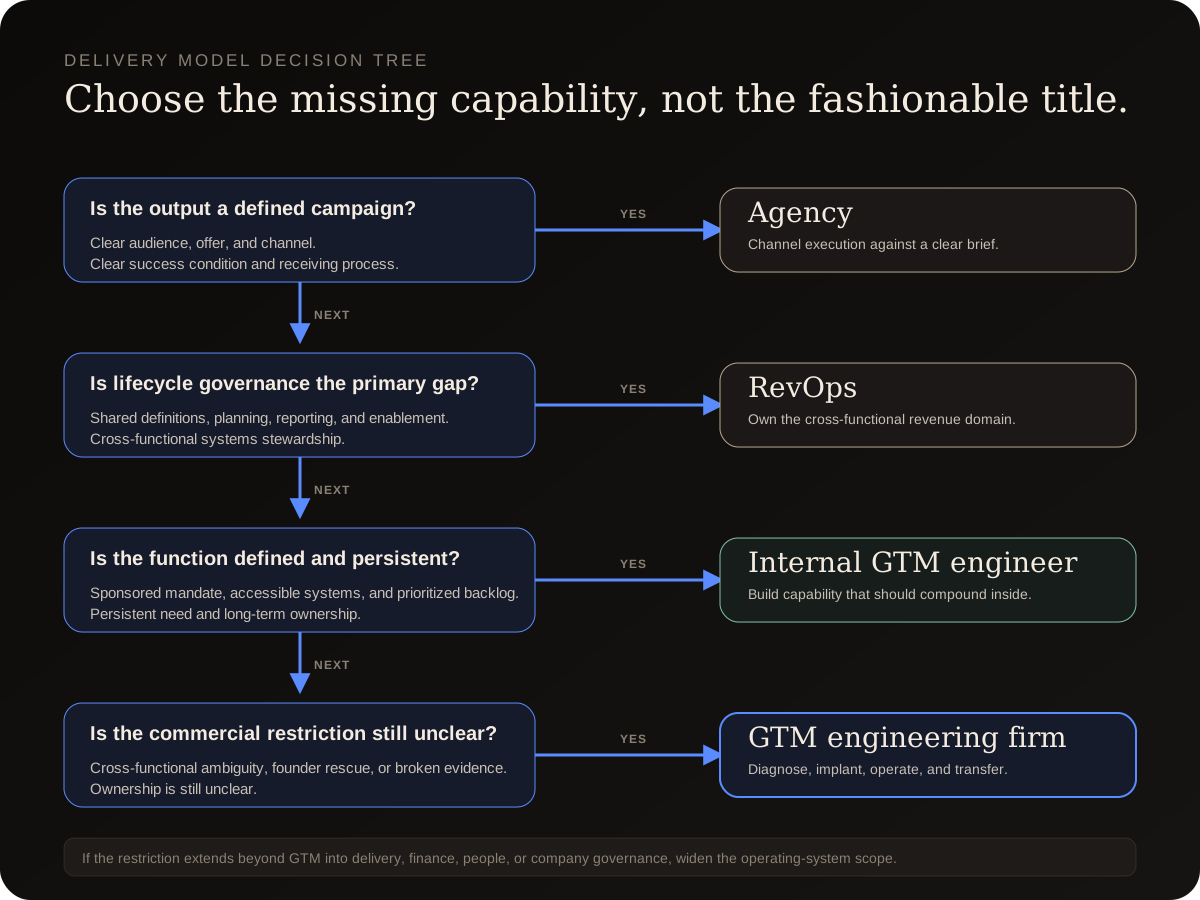
1. Is the required outcome a defined campaign with a clear receiving process? Use an agency.
2. Is the primary problem lifecycle governance, shared definitions, planning, reporting, or systems stewardship? Strengthen RevOps.
3. Is the technical-commercial function defined, persistent, sponsored, and ready for a backlog? Hire or assign an internal GTM engineer.
4. Is the restriction unclear, cross-functional, or still dependent on founder interpretation? Diagnose and implant the function before making the permanent hire.
5. Does the restriction extend beyond GTM into delivery, finance, people, or the full company operating system? Do not force a GTM intervention to solve a company OS problem.
The decision is not vendor versus employee. It is which operating capability is missing, how long it must exist, and who can own it responsibly.
FAQ
Is GTM engineering the same as RevOps?
No. RevOps owns cross-functional revenue operations, including process, planning, enablement, reporting, and systems governance. GTM engineering is a building and operating discipline that can sit inside RevOps or work across it. The boundary depends on mandate and ownership, not title alone.
Does every company need a GTM engineer?
No. A company with a simple motion, low workflow volume, or an undefined offer may need clearer strategy or basic execution first. The role becomes useful when technical-commercial work is persistent and the operating model can support it.
Is a GTM engineering firm just an automation agency?
It should not be. An automation agency primarily builds workflows from a brief. A GTM engineering firm should help diagnose the restriction, specify the commercial logic, build the minimum architecture, establish operation, and transfer ownership. If it only connects tools, the distinction is branding.
Should we hire first or use a firm first?
Hire first when the function, sponsor, backlog, access, and long-term ownership are clear. Use a firm first when those elements must be diagnosed and designed before a permanent role can succeed.
Can AI agents replace sellers or RevOps?
That conclusion is too broad. Agents can perform bounded research, classification, drafting, monitoring, and workflow actions. Human ownership remains necessary for policy, exceptions, risk, evaluation, and decisions that require accountable judgment.
What should a GTM diagnosis produce?
At minimum, it should identify the dominant restriction, the affected buyer decision, the missing evidence or ownership, the recommended operating layer, and the next repair. It should also state what remains unknown and when GTM is not the correct scope.
The first move is not a tool demo
Take one live buyer path. Trace the evidence, decision, owner, handoff, and exception. Then identify whether the restriction belongs in Truth, Playbook, Architecture, or Operator.
That diagnosis may justify a hire. It may justify RevOps, an agency, a GTM engineering implant, or no GTM project at all.
If the function is still ambiguous, the soft door is a Lorde GTM diagnosis. The purpose is to make the next operating decision clearer before anyone adds more software, activity, or permanent headcount.
Engenharia de GTM além do cargo: como construir capacidade comercial
A maioria das empresas pergunta quem deve contratar antes de definir o que o sistema comercial precisa fazer.
Essa ordem custa caro. O novo profissional pode herdar definições conflitantes, handoffs quebrados, ferramentas espalhadas e um fundador que continua resolvendo toda exceção. A contratação aumenta a capacidade da fila sem remover a restrição.
A engenharia de GTM começa um passo antes. Ela transforma evidência comercial, regras de decisão, sistemas e responsabilidade operacional em uma forma confiável de gerar avanço do comprador.
O resultado pode ser a contratação de um GTM engineer. Também pode ser RevOps, uma agência ou uma firma de engenharia de GTM atuando temporariamente. O modelo certo depende do que está faltando.
Definição
Engenharia de GTM é a disciplina de transformar evidência e decisões comerciais em um sistema operacional confiável para o avanço do comprador.
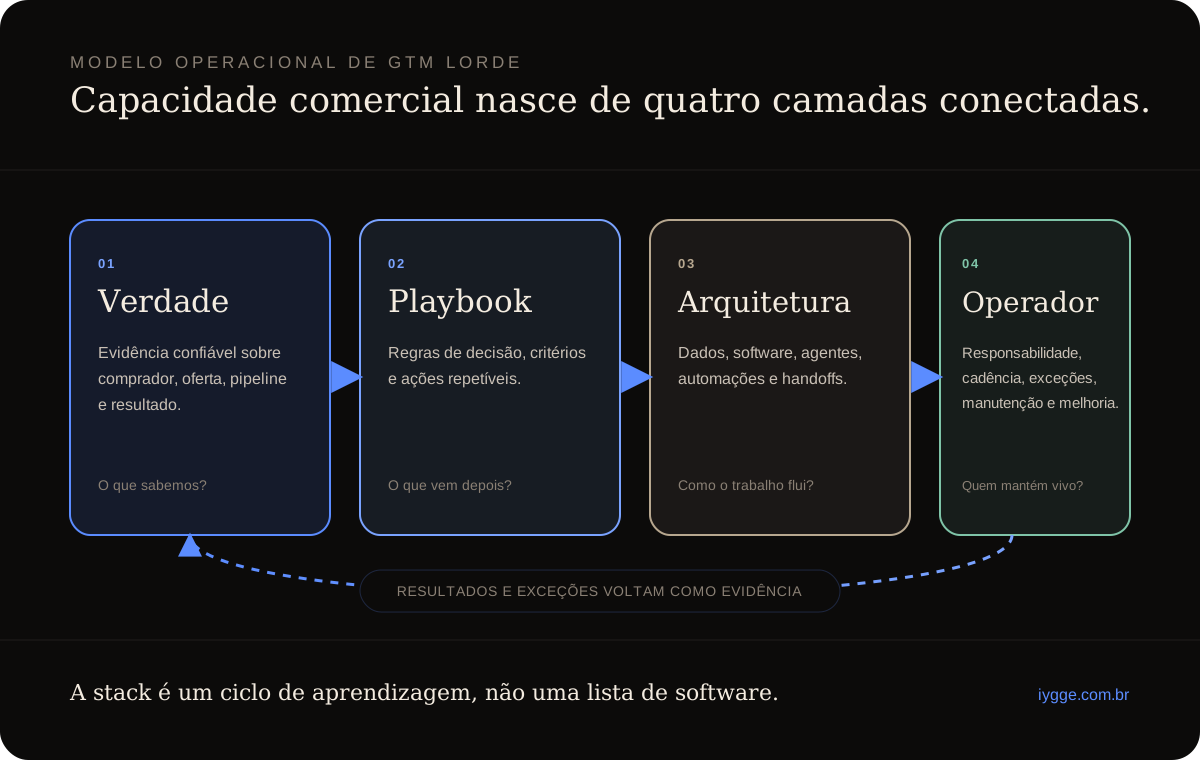
No modelo da Lorde, esse sistema possui quatro camadas:
- Verdade: as evidências sobre comprador, pipeline, oferta e desempenho que a empresa aceita como confiáveis.
- Playbook: as decisões, os critérios e as ações repetíveis que o time consegue explicar.
- Arquitetura: os dados, softwares, automações, agentes e handoffs que carregam o trabalho.
- Operador: a responsabilidade, a cadência, o tratamento de exceções e o ciclo de melhoria que mantêm o sistema útil.
Essa definição é propositalmente mais ampla do que automação.
Um fluxo pode transportar dados perfeitamente e ainda não produzir uma decisão útil. O CRM pode estar limpo enquanto marketing e vendas discordam sobre qualificação. Um agente de IA pode redigir o follow-up sem que ninguém seja dono do próximo compromisso do comprador.
Engenharia de GTM não é a camada de ferramentas. É a lógica comercial que a camada de ferramentas precisa herdar.
Por que essa categoria existe agora
A Clay ajudou a popularizar a engenharia de GTM como uma função híbrida que constrói sistemas automatizados de receita com IA, enriquecimento de dados e automação de workflows. Seu guia sobre a categoria descreve três degraus práticos: fundação de dados, modelagem de dados e ativação de dados.
Esse modelo captura uma mudança real. Pesquisa, enriquecimento, roteamento, personalização e ferramentas internas já não exigem a mesma fila de engenharia de antes. Uma pessoa com fluência comercial e técnica consegue testar e entregar workflows úteis com mais velocidade.
Mas a execução mais barata criou outro problema: agora é possível automatizar ambiguidade com mais velocidade.
Um lead score baseado em definições conflitantes de ICP não cria verdade. Outbound automatizado não corrige uma oferta fraca. Uma regra de roteamento não resolve direitos de decisão mal definidos. Um agente não sabe qual exceção deve voltar para um humano se ninguém desenhou esse limite.
Por isso a categoria importa além de um novo cargo. Times de GTM precisam de uma disciplina que conecte julgamento comercial a execução técnica.
A orientação de RevOps da HubSpot apresenta um ponto relacionado: os estágios do ciclo precisam de donos definidos, critérios de entrada e saída e processos documentados antes de alterar a stack de tecnologia. A empresa também recomenda definições compartilhadas para métricas como pipeline, lead qualificado e churn.
Ficou mais fácil construir software. O modelo operacional não apareceu sozinho.
O que a engenharia de GTM realmente constrói
Engenharia de GTM não cria demanda no abstrato. Ela projeta o caminho pelo qual evidência vira decisão comercial e essa decisão vira ação com dono.
Considere um comprador que envia um formulário depois de participar de um webinar.
O fluxo visível parece simples: enriquecer o cadastro, pontuar a conta, atribuir um responsável, enviar uma mensagem e atualizar o CRM.
O sistema comercial por baixo precisa responder perguntas mais difíceis:
- Que evidência torna essa conta relevante agora?
- Quais fatos foram observados, inferidos ou ainda estão ausentes?
- O que qualifica o comprador para uma conversa?
- Qual decisão pode ser automatizada e qual exige julgamento?
- Quem é dono do próximo passo?
- O que acontece quando fontes de enriquecimento discordam?
- Como o resultado melhora o modelo?
Essas perguntas são o trabalho de engenharia. A automação é uma implementação das respostas.
É também por isso que atividade e capacidade comercial são coisas diferentes. Um time pode processar mais registros, enviar mais mensagens e marcar mais reuniões internas enquanto o caminho do comprador continua dependente de resgate e reinterpretação. O teste prático é saber se o sistema gera avanço confiável sem exigir que o fundador reconstrua a lógica a cada caso. Nosso primeiro artigo mostra como auditar essa restrição.
As quatro camadas do sistema operacional de GTM
Verdade
Verdade é a evidência que o sistema comercial está autorizado a tratar como confiável.
Ela inclui as definições de ICP, estágio, qualificação, origem, intenção do comprador, aderência à oferta, motivo de perda, próximo compromisso e resultado. Também registra incerteza. Um fato ausente não deve virar um palpite confiante sem deixar rastro.
Essa camada é mais ampla do que higiene de dados. Registros limpos podem preservar a definição errada com excelente consistência.
Playbook
O Playbook transforma evidência em decisão.
Ele responde perguntas como:
- Quando esse lead deve chegar a um vendedor?
- Que evidência muda a próxima ação?
- Qual oferta corresponde ao estado atual do comprador?
- Quando o follow-up deve parar?
- Que exceção exige julgamento do fundador ou de um executivo?
Um playbook útil não roteiriza cada frase. Ele padroniza a decisão repetível e deixa o julgamento visível onde a variação realmente importa.
A definição de trabalho padronizado do Lean Enterprise Institute oferece uma lente operacional útil: tornar explícitas a sequência e as condições atuais do trabalho para depois melhorar a partir de uma base visível. Aplicado a GTM, o objetivo não é transformar vendedores em máquinas. É parar de reconstruir da memória a mesma decisão.
Arquitetura
A Arquitetura transporta o playbook pelos sistemas.
Ela pode incluir formulários, objetos de CRM, fontes de enriquecimento, inteligência de conversas, lógica de roteamento, filas, dashboards, automações e agentes de IA. A arquitetura deve preservar evidência, aplicar os limites escolhidos, expor falhas e deixar a responsabilidade operacional visível.
A stack correta depende do contexto. Uma planilha pode bastar para um ciclo diagnóstico de baixo volume. Uma operação com mais volume pode exigir warehouse, modelo de eventos, orquestração e controles de produção.
Complexidade não é maturidade. A arquitetura é madura quando serve à decisão com confiabilidade.
Operador
O Operador mantém o sistema vivo.
Alguém precisa revisar exceções, resolver evidências conflitantes, priorizar mudanças, monitorar falhas e decidir quando o playbook deixou de refletir o mercado.
Essa é a camada que muitas narrativas de automação tratam como detalhe. Um workflow pode ser lançado uma vez e degradar em silêncio. Fornecedores mudam campos. Vendedores criam atalhos. Ofertas evoluem. Exceções se acumulam. O responsável pela operação transforma esses sinais em manutenção e aprendizado.
Sem Operador, a arquitetura vira projeto abandonado. Sem as outras três camadas, o Operador vira a integração humana de tudo.
Como o trabalho sai do sintoma e vira sistema
Uma atuação de engenharia de GTM não deveria começar por uma lista de ferramentas. Ela deve avançar por seis etapas explícitas.
1. Enquadrar
Nomeie o sintoma comercial, a decisão afetada, o dono atual e a fronteira do problema. “O pipeline está fraco” ainda não é um bom enquadramento. “A demanda inbound qualificada espera dois dias porque muda de dono entre três definições” está mais perto.
2. Diagnosticar
Percorra um caminho real do comprador. Inspecione evidências, decisões, filas, handoffs, sistemas, exceções e intervenções recorrentes do fundador.
O Theory of Constraints Institute coloca a identificação da restrição do sistema como primeiro passo de foco. A lição prática para GTM é contenção: melhorar a restrição que governa o sistema antes de adicionar volume em todos os pontos.
3. Especificar
Defina o contrato de evidência, as regras de decisão, a responsabilidade, a saída esperada, as exceções e o método de verificação. Isso vira a especificação comercial para a construção.
Direitos de decisão entram aqui. O modelo DACI da Atlassian separa quem conduz, quem aprova, quem contribui e quem deve ser informado. GTM não precisa copiar esse framework em todo caso, mas precisa separar quem move o trabalho de quem toma a decisão.
4. Construir
Implemente a menor arquitetura capaz de carregar a especificação. Prototipe as premissas arriscadas antes de endurecer o sistema inteiro. Preserve reversibilidade enquanto a evidência ainda for fraca.
5. Operar
Rode o workflow com casos reais. Inspecione falhas, exceções, atrasos e discordâncias. Verifique se o sistema muda a decisão-alvo, não apenas se a automação dispara.
6. Transferir
Documente o modelo operacional, treine o dono interno, defina a cadência de melhoria e deixe o caminho de rollback claro. Uma firma externa não deve criar dependência permanente por acidente.
Essa sequência separa compra de automação de implantação de uma função comercial.
Três workflows práticos de engenharia de GTM
Os exemplos abaixo são padrões operacionais, não cases de clientes nem promessas de desempenho.
Qualificação e roteamento inbound
Verdade define origem, aderência da conta, evidência do comprador, incerteza e critérios de descarte. Playbook determina quando rotear, quando buscar mais evidência e quando suprimir. Arquitetura enriquece, avalia, atribui e registra o motivo. Operador revisa falsos positivos, oportunidades perdidas e critérios que mudaram.
Um fluxo de roteamento sem essas camadas costuma virar um motor oculto de política que ninguém assume.
Inteligência de conversa até o follow-up com dono
Verdade separa o que o comprador disse da interpretação do vendedor. Playbook define compromisso, risco, objeção e próxima decisão. Arquitetura extrai evidência candidata da conversa, rascunha o follow-up e atualiza o registro. Operador aprova ações sensíveis, amostra a qualidade e melhora as instruções.
O valor não está no resumo da reunião. Está em preservar a decisão do comprador e atribuir o próximo movimento.
Redução de exceções que voltam ao fundador
Verdade registra quais casos retornam ao fundador e por quê. Playbook transforma julgamento recorrente em regras explícitas sem apagar exceções realmente executivas. Arquitetura encaminha casos padronizados e expõe os não resolvidos. Operador revisa se a regra continua válida.
O objetivo não é tirar o fundador da receita. É reservar seu julgamento para decisões que de fato precisam dele.
GTM engineer, firma de engenharia de GTM, RevOps ou agência?
Esses modelos se sobrepõem, mas resolvem problemas primários diferentes.
GTM engineer interno
Escolha um GTM engineer interno quando a empresa precisa de capacidade técnica e comercial persistente para construir e evoluir o sistema.
O cargo faz sentido quando o modelo comercial está definido o suficiente para gerar um backlog priorizado, os sistemas são acessíveis, existe um patrocinador executivo para resolver conflitos e os workflows contêm conhecimento institucional que deve se acumular dentro da empresa.
Esse profissional não pode virar uma fila de chamados sem direção. O mandato deve esclarecer se o papel é dono de experimentação, workflows de produção, ativação de dados ou uma função operacional mais ampla.
Firma de engenharia de GTM
Escolha uma firma de engenharia de GTM quando a função ainda não está definida ou a restrição dominante é incerta.
A firma deve diagnosticar o caminho do comprador, especificar o modelo operacional ausente, construir a arquitetura mínima, operar com casos reais e transferir a responsabilidade ou uma cadência contínua explícita.
Esse modelo faz sentido quando contratar imediatamente transformaria um mandato fragmentado em cargo permanente. Também é útil quando a empresa precisa de senioridade temporária atravessando funções antes de decidir qual capacidade deve internalizar.
Uma firma não é a resposta quando o briefing já descreve uma campanha clara ou quando a empresa só precisa de mais volume de execução.
RevOps
Escolha RevOps quando a necessidade principal é governança do ciclo de receita entre marketing, vendas e sucesso do cliente.
RevOps normalmente assume definições comuns, desenho de processos, enablement, reporting, planejamento, administração de sistemas e desempenho entre funções. A Winning by Design também trata receita recorrente como um sistema de entradas, processos e saídas, e não como silos funcionais isolados.
Um GTM engineer pode estar dentro de RevOps. A diferença é que RevOps responde pelo domínio operacional, enquanto o GTM engineer adiciona capacidade especializada de construção e experimentação.
Agência
Escolha uma agência quando a empresa precisa de execução de canal a partir de um briefing suficientemente claro.
Público, oferta, mensagem, canal, orçamento, condição de sucesso e processo interno para receber a demanda já devem estar definidos. A agência pode melhorar a campanha, mas não deveria assumir silenciosamente a reconstrução de todo o sistema operacional comercial.
Se toda campanha produz a mesma falha de handoff, o problema deixou de ser apenas execução de campanha.
Quando contratar internamente
Contrate um GTM engineer interno quando a maioria destas condições for verdadeira:
- O trabalho é persistente, não uma implantação temporária.
- O movimento comercial e as decisões principais estão definidos.
- Existe um backlog priorizado ligado a resultados de negócio.
- O papel possui um patrocinador executivo responsável.
- A empresa consegue oferecer acesso a dados, sistemas e usuários da linha de frente.
- A organização sabe distinguir protótipo de sistema de produção.
- O conhecimento gerado deve se acumular dentro do negócio.
- Existe uma cadência de Operador para revisão, manutenção e aprendizado.
Procure julgamento comercial, pensamento sistêmico, fluência em dados, velocidade de prototipagem, disciplina de produção, curiosidade e empatia por quem vai usar o sistema.
Sinais de risco incluem respostas centradas em ferramenta, visão limitada a um canal, ausência de supressão ou fallback, falta de plano de verificação e sistemas que só o candidato consegue operar.
O guia de contratação da Clay é uma referência útil sobre o papel. O teste adicional da Lorde é saber se o modelo operacional está pronto para tornar essa contratação produtiva.
Quando diagnosticar e implantar com apoio externo
Use diagnóstico e implantação externos quando várias destas condições estiverem presentes:
- Times usam definições diferentes para o mesmo estado comercial.
- O fundador resolve exceções rotineiras repetidamente.
- O CRM registra atividade, mas não preserva evidência de decisão.
- Handoffs mudam o significado ou o dono do trabalho.
- A empresa compra ferramentas antes de nomear a restrição.
- Existe automação, mas ninguém responde pela política ou manutenção.
- O papel interno necessário ainda não pode ser descrito com clareza.
- O problema atravessa marketing, vendas, dados e gestão.
O parceiro externo deve deixar artefatos, não mistério: definições de evidência, regras de decisão, mapas de arquitetura, responsabilidade, cadência operacional, verificação e termos de transferência.
Ajuda externa vira passivo quando esconde a lógica, mantém controle desnecessário ou mede sucesso por atividade que o negócio não consegue conectar a uma decisão.
O que a IA muda e o que ela não muda
A IA amplia o que um operador consegue pesquisar, classificar, redigir, monitorar e prototipar. Também aumenta o número de decisões que um sistema consegue tomar mal em alta velocidade.
O guia prático da OpenAI para construção de agentes descreve agentes por modelos, ferramentas e instruções, tratando guardrails e intervenção humana planejada como partes centrais do desenho. Essa arquitetura se conecta diretamente à engenharia de GTM:
- Ferramentas precisam de limites de acesso.
- Instruções precisam de definições comerciais.
- Ações precisam de regras de aprovação.
- Falhas precisam de caminhos de escalonamento.
- Saídas precisam ser avaliadas contra a decisão-alvo.
O AI Risk Management Framework do NIST adiciona um princípio mais amplo de governança: a confiabilidade deve ser considerada no desenho, desenvolvimento, uso e avaliação de sistemas de IA.
A IA não decide sozinha o ICP, a oferta, a tolerância a risco ou os direitos de decisão da empresa. Ela pode executar e melhorar um ciclo definido. Não deve inventar a política em silêncio.
Regra de decisão
Use esta sequência antes de escolher o modelo de entrega.
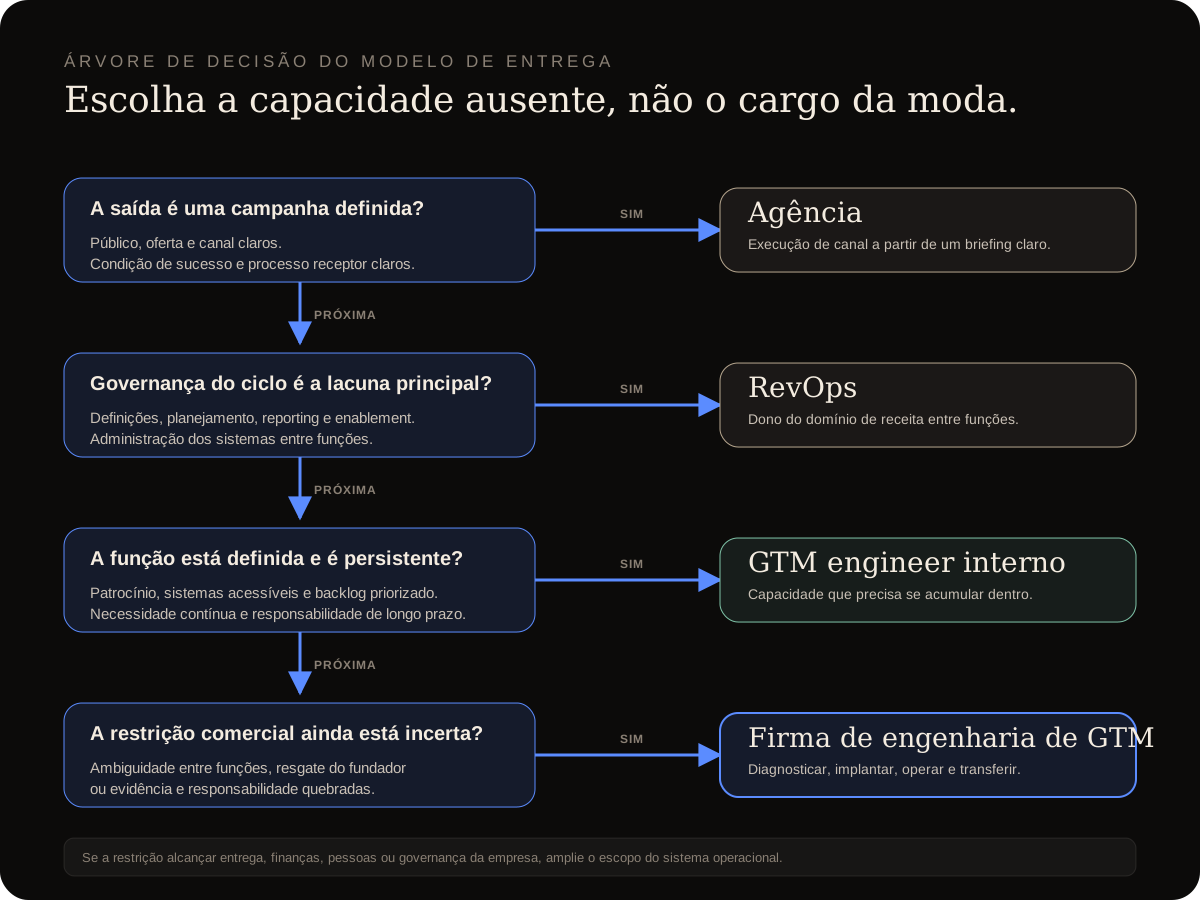
1. A saída desejada é uma campanha definida com um processo claro para receber a demanda? Use uma agência.
2. O problema principal é governança do ciclo, definições compartilhadas, planejamento, reporting ou administração de sistemas? Fortaleça RevOps.
3. A função técnica e comercial está definida, é persistente, possui patrocínio e está pronta para um backlog? Contrate ou designe um GTM engineer interno.
4. A restrição é incerta, atravessa funções ou ainda depende da interpretação do fundador? Diagnostique e implante a função antes da contratação permanente.
5. A restrição ultrapassa GTM e alcança entrega, finanças, pessoas ou o sistema operacional inteiro da empresa? Não force uma intervenção de GTM a resolver um problema de company OS.
A decisão não é fornecedor contra funcionário. É qual capacidade operacional está ausente, por quanto tempo ela precisa existir e quem pode assumir sua responsabilidade de forma saudável.
Perguntas frequentes
Engenharia de GTM é a mesma coisa que RevOps?
Não. RevOps responde pela operação de receita entre funções, incluindo processo, planejamento, enablement, reporting e governança de sistemas. Engenharia de GTM é uma disciplina de construção e operação que pode estar dentro de RevOps ou atravessá-la. A fronteira depende de mandato e responsabilidade, não apenas do título.
Toda empresa precisa de um GTM engineer?
Não. Uma empresa com operação comercial simples, baixo volume de workflows ou oferta indefinida pode precisar primeiro de mais clareza estratégica ou execução básica. O papel ganha utilidade quando o trabalho técnico e comercial é persistente e o modelo operacional consegue sustentá-lo.
Uma firma de engenharia de GTM é apenas uma agência de automação?
Não deveria ser. Uma agência de automação constrói workflows a partir de um briefing. Uma firma de engenharia de GTM deve ajudar a diagnosticar a restrição, especificar a lógica comercial, construir a arquitetura mínima, estabelecer a operação e transferir a responsabilidade. Se apenas conecta ferramentas, a diferença é branding.
Devemos contratar primeiro ou usar uma firma primeiro?
Contrate primeiro quando função, patrocinador, backlog, acesso e responsabilidade de longo prazo estiverem claros. Use uma firma primeiro quando esses elementos precisarem ser diagnosticados e desenhados antes que um cargo permanente possa funcionar.
Agentes de IA podem substituir vendedores ou RevOps?
Essa conclusão é ampla demais. Agentes podem executar pesquisa, classificação, redação, monitoramento e ações delimitadas em workflows. Continua sendo necessária responsabilidade humana por política, exceções, risco, avaliação e decisões que exigem julgamento com prestação de contas.
O que um diagnóstico de GTM deve produzir?
No mínimo, ele deve identificar a restrição dominante, a decisão do comprador afetada, a evidência ou responsabilidade ausente, a camada operacional recomendada e o próximo reparo. Também deve declarar o que continua desconhecido e quando GTM não é o escopo correto.
O primeiro movimento não é uma demonstração de ferramenta
Escolha um caminho real do comprador. Percorra evidência, decisão, dono, handoff e exceção. Em seguida, identifique se a restrição está em Verdade, Playbook, Arquitetura ou Operador.
Esse diagnóstico pode justificar uma contratação. Pode justificar RevOps, uma agência, uma implantação de engenharia de GTM ou nenhum projeto de GTM.
Se a função ainda estiver ambígua, a porta leve é um diagnóstico de GTM da Lorde. O objetivo é tornar a próxima decisão operacional mais clara antes que alguém adicione software, atividade ou headcount permanente.